July…already, where’s this year gone?!

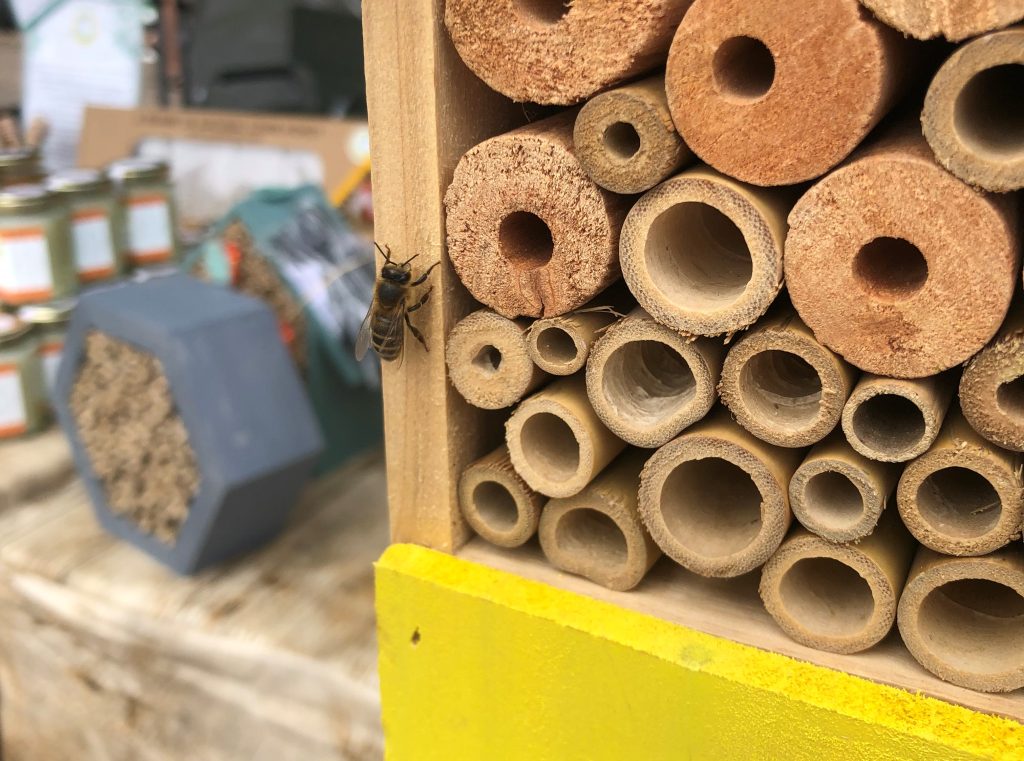


Wow, what a difference a week makes! We’ve gone from constant rain to beautiful sunshine and hot weather and the bees loving it! This week we have been able to make up another 7 hives (This is a topic for a future post) so we are that bit closer to our goal of 100 hives for the year! Anyway this post is about how the honey gets from our bees to you!
To get the supers (Not sure what these are check out our post about parts of the bee hive – here) off the hive without many bees in them we use something called a clearing board. Essentially this is a flat board with a hole in the centre, this hole has a mesh cone covering it so that the bees can get through it to go down to the rest of the hive but they can’t get back in. Essentially a one way valve for bees!
This removes about 95% of the bees the rest of them fly to the window in the first extracting room so when we take them through into the second room where they get extracted there are no bees (although one does occasionally hitch a ride through the PVC curtain!)
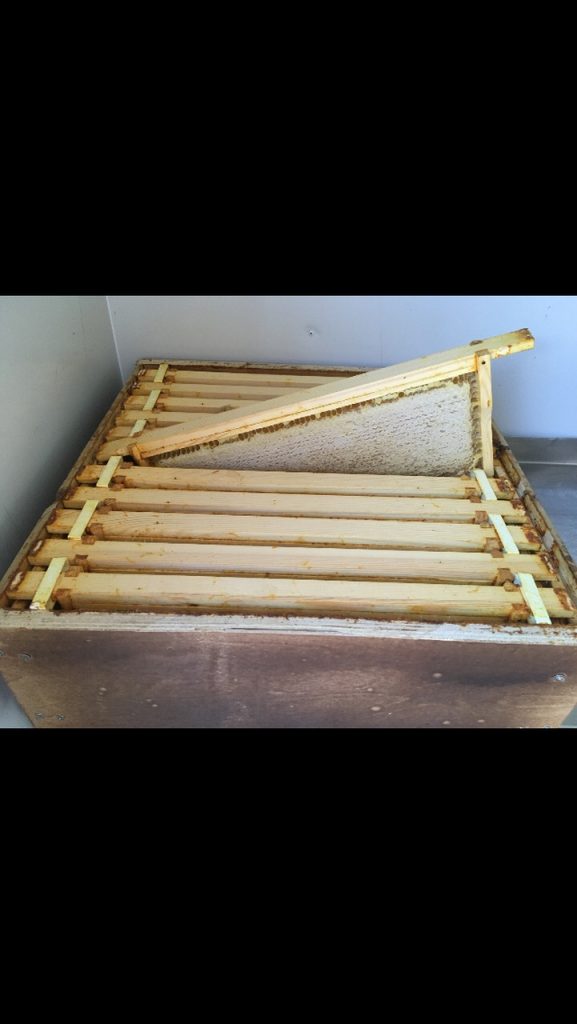
The honey is in the beeswax comb covered over with a thin layer of wax that the bees make so that the honey doesn’t absorb water and spoil. Our first job is to cut or scrape the capping wax off the frames. There can be a lot of honey left in this wax so at the end of the process we squeeze it through a small press, similar to a fruit press to get every last drop of honey out! Even the wax doesn’t go to waste as we make candles and other products from it!

Once the frames have been uncapped we place them in a centrifuge, ours holds 20 frames and uses an electric motor to spin them up to 200 RMP although we rarely get it going that fast because it can break the delicate beeswax structure.
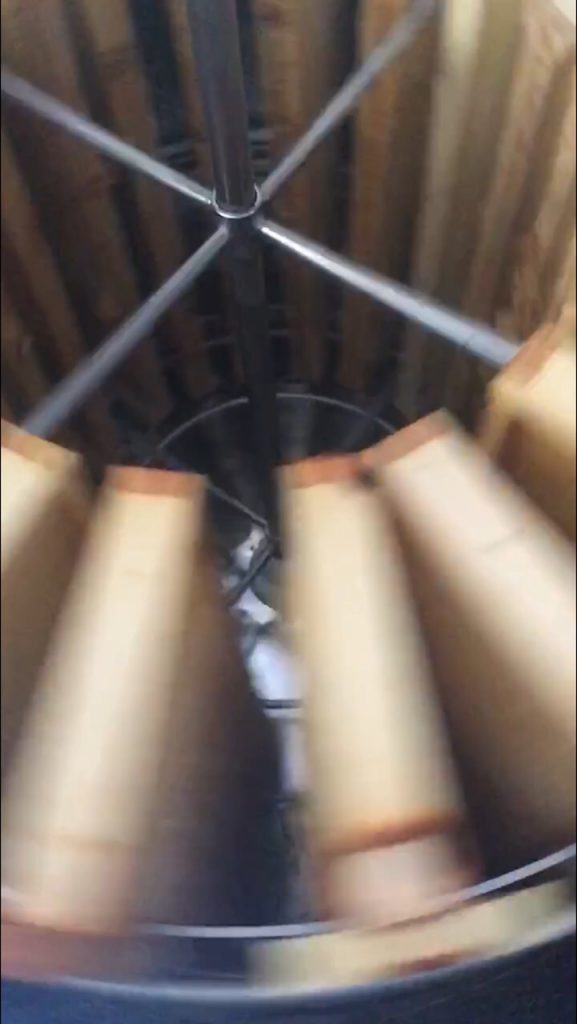
The honey spins out against the sides and runs out through a valve at the bottom through a fine strainer, the strainer doesn’t remove any of the goodness or pollen from our honey it simply stops you getting a jar full of bits of wax and while some people like having wax in there honey lots of people don’t. If you do want completely unfiltered honey then let us know at info@holthallapiary.co.uk and we can get you a jar next time we harvest!
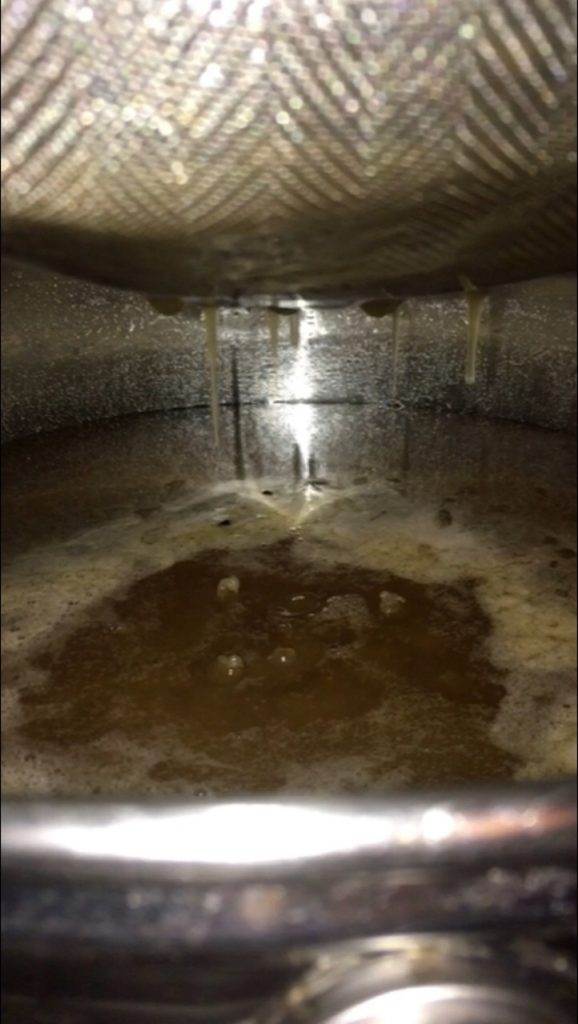
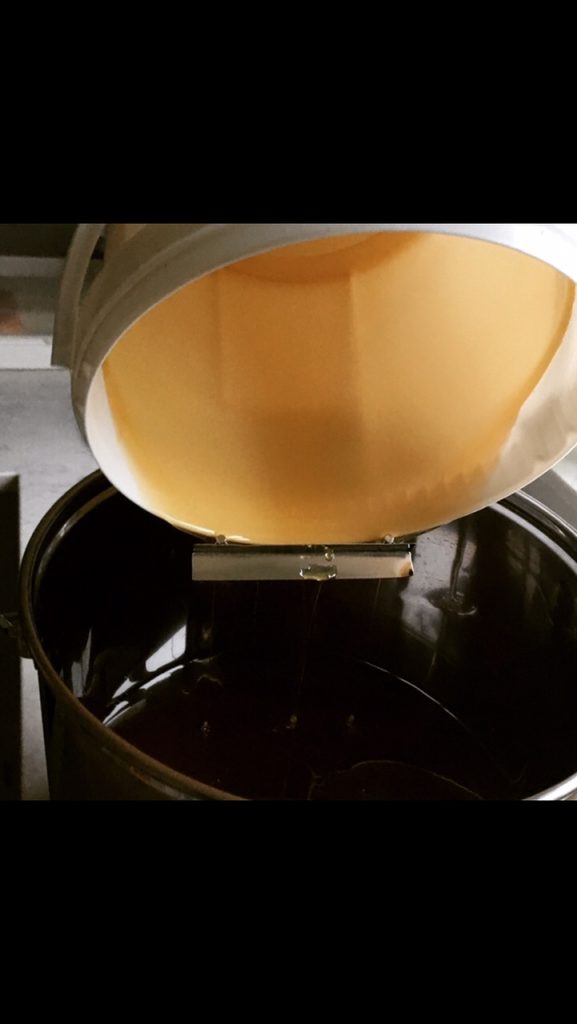
Our honey sits in a bucket for a minimum of one day to allow any air to rise to the top so you don’t get white bubbles in your jar which doesn’t look too good on a shelf. Some of the honey will remain in buckets longer as storage because between us I don’t really enjoy jarring up honey! I should just say that the length of storage has no impact on the quality of the honey!
Previously to filling we will have washed and sterilised the jars we need to fill.
To jar the honey the buckets are poured gently, trying to incorporate as little air as possible, into a jarring tank that has a clean cut valve to stop the drips once the jar is full. Each jar is placed on a set of scales under the valve and each jar is filled by hand, with all the practice I’ve had I can now fill them to about +/- 1g which is as good as a machine… just a little slower!
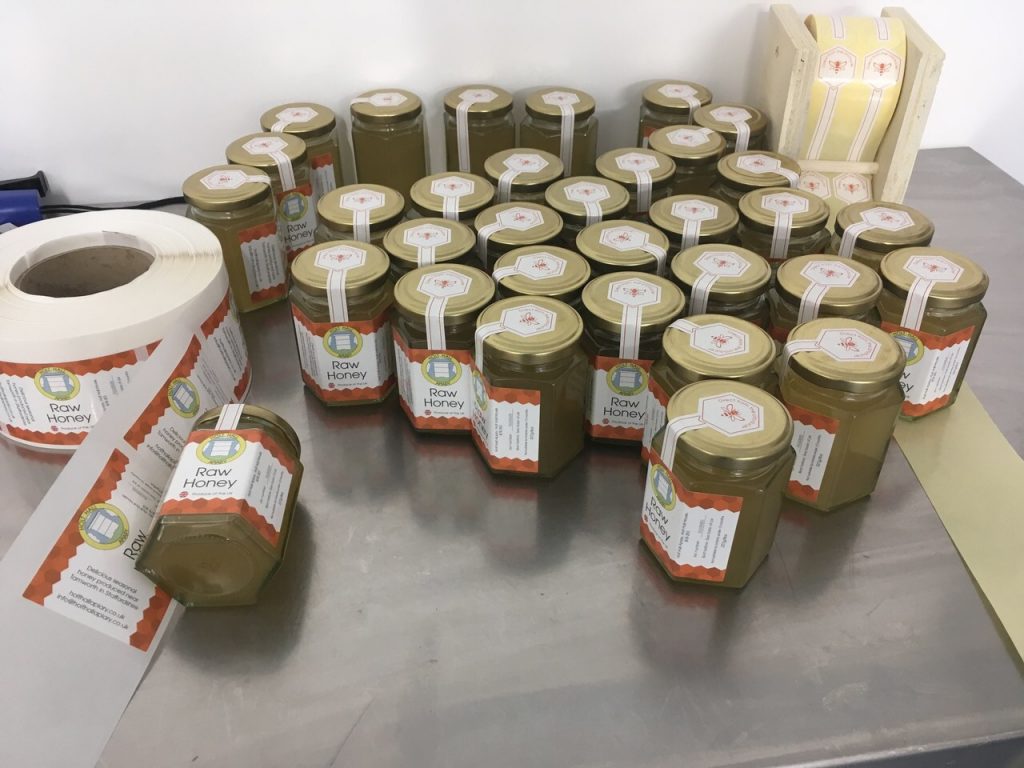
The jars are sealed and the anti tamper label is added. We then add the best before sticker to the bottom of the jar and the main label. New for this year we have numbered labels, this means that we can track each jar from the hive to when it was extracted, stored and jarred, its hard to beat that level of traceability, if you’ve got one of our jars and you want to know that information fill in the form HERE and we will get back to you ASAP!
Thank you for reading this quick post, I’d really love to hear from you with ideas for blog posts, new product ideas or any feedback you’ve got! If you would like to help then please fill out the form below
Matthew Ingram

As I promised last time, and as you will have guessed from the title, this post is about queen bees. While the queen can’t live without workers, without a queen a hive will fail faster. At this time of year and as a small bee farm looking to grow quickly, queens are key. We can split an existing hive many times and introduce a new queen to each split which then itself becomes a mini hive that will build up over the spring and summer.
Well there are two options for getting extra queens, one is rearing our own queens and I’ll talk about that more in the next paragraph. The other way of getting queens is… by post! The queens we have had this year have come from the Mediterranean, the warmer climate means they are able to rear new queens far earlier in the season than we are able to here in the UK. Although these queens came as part of a larger shipment amazingly you can send queens around the UK by the aptly named Royal Mail, however the postman does give you a funny look as you sign for a package of bees that have been buzzing in his van all morning!
In mid April we had our first batch of queens arrive, they come in well ventilated cages with food for their travels, the queen is accompanied by 5 or 6 workers who will look after her until she is introduced to a hive of her own. Generally I believe it is better to breed your own queens however the extra month these imported queens give us vastly improves the quality of the hives they live in as they have far longer to establish.


Queen rearing is in my opinion one of the most fascinating parts of beekeeping, the queens genetics and quality directly affects every aspect of a hives performance and temperament. This will be only a very short introduction into how we do it as it can be complex and for none beekeepers probably quite boring. It is also fair to say that the average ‘hobby’ beekeeper probably doesn’t bother with queen rearing, at least not intentionally!
The method we use is called grafting, that means we take a normal worker larvae that has been hatched within the last 24 hours and transfer it into a plastic (sometimes wax) cell that mimics a queen cell. Under the right circumstances (the hive is very busy but has no queen) the bees produce queen cells from the grafts that can then be harvested and the new queens emerge in their new hives.
To help this process run smoothly, as we only have a limited amount of queen rearing kit that goes in the hive, we bring the capped (8 day old) queen cells inside and place them in a chicken incubator, with a constant ‘hive’ temperature and a high humidity the queens hatch out and can be introduced to their new hives.
Using this method we produce about 5 queens a week which is certainly small scale but is sufficient for our needs. Our first queens hatched out on the 1st May which is quite early due to the unseasonably warm April, I would expect her to be laying eggs within two weeks.


I hope that although this was quite a basic post you’ve all learned something new about the amazing world of beekeeping, I’m always certainly learning new things about it. Thank you for reading – If you are interested in the roles of other bees in the hive check out one of our other posts here
Matthew Ingram
[mc4wp_form id=”1002″]

So in this post I’m going to cover probably the most important aspect of beekeeping… the bees! Now bees are very complex so I’m not going to go into full detail because otherwise you would be sat here reading this for an extremely long time! My plan is to cover a bit about the roles within a hive and try and give you some informative, fascinating and downright extraordinary facts about bees.

So I’m going to start this section off by expelling a beekeeping myth. The queen has no more control over the hive than the workers, she can’t tell them what to do and in many cases it’s the workers telling the queen what to do!
The queen is the only bee in a ‘normal’ hive capable of laying eggs and reproducing. The reason I say normal hive is because if a hive is without a queen for too long for any reason the workers can attempt to lay eggs, it doesn’t work but its a last ditch attempt to save the colony. The queen lays around 2000 eggs per day during the summer months, to give that some perspective the queen is laying her own body weight in eggs, every single day!
To make sure the queen is able to lay at that rate the workers look after her, feeding, grooming and even guiding the queen around the hive to areas on comb they need her to lay in. Amazingly the queen can choose to lay an egg that becomes a male (drone) which is unfertilised or a female (worker) which is fertilised depending on the needs of the colony.
When the queen runs out of space to lay eggs it signals the on set of swarming, this is where the workers start to produce a second queen so that the hive can split in two. When this happens the old queen stops laying and the workers restrict food and keep her moving to lose weight, she loses 1/3rd of her weight which allows her to fly with the assistance of the workers to their new hive!
Did you know that in the first few days of hatching a worker bee larvae can be changed into a queen bee by feeding it large amounts of royal jelly a natural substance made by the bees, amazingly just the change in food during the first few days of its life means that unlike a worker who’s lifespan is about 6 weeks a queen can live up to 7 years!!

Drones are male bees, they’re bigger than workers but despite that don’t actually have a stinger which is part of the female bees reproductive system. Films like ‘Bee Movie’ show all of the males working as worker bees, in reality the males are solely there for reproduction after which they die. The drones are looked after by the workers and fly out to drone congregation areas… scientists still don’t really understand how they pick these spots but all the drones from hives in the area somehow know where to go.
Bees are notoriously hard working and as the saying goes there’s no such thing as a free meal. In late September when the bees know the winter is coming the drones are kicked out of the hive because it gets too cold for them to go out on mating flights and they eat food without providing anything in return, bees really are very efficient! In the spring when the weather starts to warm up the bees start to rear drones which then reproduce with queens from other hives.

So there’s an awful lot I could write about workers as they make up over 95% of hive population but I’ll try and keep it short and sweet. So, as you will know from the section on drones and the queen, workers are all female but unlike the queen can’t lay fertile eggs that become other workers.
The role of a worker changes throughout its life depending on it’s age and the needs of a colony. Below you can see what jobs they do throughout their usual 6 week lives, notice there is some overlap and that is just them responding to needs of the hive.
| Days Old | Job In The Hive |
| 1-3 | Housekeeping – These bees clean the wax cells ready for the queen to lay in. |
| 3-16 | Rubbish Disposal – These bees remove rubbish including bees and larvae that have died in the hive. |
| 4-12 | Nurse Bees – They check on and feed the larvae, on average a single larvae is checked 1,300 times per day. |
| 7-12 | Attending to the Queen – Feeding and cleaning the queen. |
| 12-18 | Fanning the hive, controlling the temperature and humidity of the hive |
| 12-35 | Building the hive – Bees from 12 days old can start producing wax. |
| 18-21 | Guarding the hive – Standing a the hive entrance stopping intruder bees, wasps or other predators. |
| 22 -42 | Collecting resources – Collecting honey, water and propolis (tree resin) for the hive |
Workers hatched in late September onward are ‘winter bees’ their bodies are actually subtly different from the workers hatched in the summer. The winter bees have slightly higher fat bodies in their abdomen that allows them to reserve more energy. This small difference means the workers born just before winter live for several month until the next spring, that’s necessary because during the winter it gets too cold for brood to be reared in the hive.
So the weather this week has been unseasonably good, it’s given me a chance to go around my hives and have a little look inside, I’m pleased to report that all of them are looking healthy and growing fast! This could be good or bad news depending on the weather to come, but we will keep a close eye on them and make sure everything goes alright no matter what the weather!
I hope you have found this post interesting and now know a little more about life inside a hive, as I said this is a very quick look at honey bees. If you want to learn even more about bees and get hands on why not take a look at our beekeeping experiences.
Thank you for reading our blog and supporting our business. If you have any questions about this or beekeeping in general ‘id love to know, leave a comment below and I will look at doing a post answering some of your questions.
Matthew Ingram
[mc4wp_form id=”1002″]

Beekeeping is a fascinating hobby, or for some of us lucky enough even a job, but for those that haven’t had any beekeeping experience it can seem like a mystical and confusing world. I noticed during my first few posts that I just dove right with the beekeeping but perhaps didn’t go over the basics first. This fairly long post (Sorry I got carried away!) is going to go over the year of a beekeeper, so you can understand a little more about how bees and beekeepers work together throughout the year.
It may seem odd starting a year off in April but for a beekeeper that’s when things really start to get interesting. April is a time when the bees become more active and the longer spring days have prompted the queen to increase the amount of eggs she lays. Did you know, at the height of summer the queen can lay 1,500 eggs per day! As well as the growing bee population, spring flowers are starting to come out and the bees start producing the first honey of the year.

May, the temperatures are warming up now and the bees are out flying every day. Oilseed Rape, the yellow flower seen all over the countryside is in full flower and it provides a massive boost and first crop for our bees. We move our bees as close to the Rape Seed as possible to cut down on how far they have to fly, the bees do the rest of the work! It’s not uncommon for a hive to produce upwards of 20kgs of honey in just a few weeks!
Oilseed Rape honey is deliciously sweet and fairly mild tasting, but it has one quality that can stop even the best beekeeper in their tracks. We all know honey granulates over time, it’s fair to say we have all found that jar of honey at the back of the cupboard we had forgotten about, now rock solid. Well Oil Seed Rape honey does this in a matter of weeks or even days if it isn’t extracted from the comb quick enough.
To get around this we produce soft set honey, a smooth creamy texture created by grinding down the sugar crystals until they’re no longer bitty and unpleasant to eat. It’s one of our most popular types of honey and you can find it here – Creamed Honey

The June gap – sounds funny I know but it can be a really serious time for bees and their keepers . Towards the end of May the spring flowers, like the Oil Seed Rape and many of our native flowering trees have gone over and no longer produce pollen or nectar. The problem is many of our summer flowers aren’t yet ready which means our bees can go hungry.
The hive is nearing it’s peak capacity over summer, around 60,000 bees but the food sources become scarce and as many beekeepers extract spring honey in May/June we need to be extra attentive making sure our hives have enough food or supplement in their food.

This is the month the bees really expand, the queen is laying roughly 2,000 eggs per day and the workers are busy collecting pollen and nectar from an abundance of flowers.
The hive, reaching maximum capacity can also cause the bees to swarm, which is a natural way of a hive reproducing. In a swarm the old queen leaves with about one third of the workers to make a new hive, while the old hive produces a new queen to take over. As a beekeeper we want to avoid swarms as much as possible, not only can they be a nuisance to members of the public they also greatly reduce the workforce of the hive, and the stores of honey the colony has amassed throughout the year.

While most years are fine and the bees continue well with the queen only laying slightly less than the peak of July, 2018 was slightly different. The long hot dry spell caused many flowers to stop producing nectar which in turn had a strain on the bees. With such a large population and limited access to forage bees in some areas started consuming more honey than they could produce.
Despite the dry spell, the summer of 2018 was record breaking for many beekeepers, as the hot but damp start to the year gave our bees the an abundance of flowers producing nectar and pollen.

September is the first month in which we as beekeepers start to really think about preparing for winter, the main honey flow (plants in flower) is over and the bees population has started to reduce. Our first job is to remove the supers of honey (Not sure what a super is? Check out our post on parts of the beehive – Here) This is our main crop of honey and may be as much as 50kg per hive!
Varroa, so if you have been reading our blog i’m sure you will have heard me mention Varroa Mites, they are a small parasitic mite that live on bees and can cause the spread of disease and eventually the colony death. In September we treat our bees with a sort of medicine that kills the exposed mites without harming the bees, by doing this we know that our bees are as healthy as possible ready winter.

While when we take the honey crop we do leave plenty for the bees over the winter some of the bigger hives go through their stores very quickly, while the weather is still relatively mild feed our bees with a concentrated sugar solution which bulks the hive up for the rest of the winter.
We also add mouse guards, a perforated metal sheet that stops mice from entering the hive to seek food and shelter but allows the bees to come and go freely.

As the night and now days become colder the bees begin to cluster, many people believe honey bees hibernate which isn’t true. In fact honey bees huddle together to keep warm, the lack of brood allows the bees to keep the hive at a slightly lower temperature than the rest of the year as it isn’t acting as an incubator.

With the days now as short as they are going to be the queen has almost entirely stopped laying eggs. The bees in cluster are slowly moving over the comb in a circular pattern consuming their stores as they go. There isn’t much a beekeeper can do now besides getting ready for next year!

One of the first jobs of the new year is treating our bees for Varroa mite, again! In January we can use a naturally occurring chemical, Oxilic acid to kill mites. The acid is put into a mild solution and gently trickled over the bees. It doesn’t hurt the bees but the exposed mites are killed. This means our bees should be going into spring as healthy as possible!
The other great thing about this is that it gives you a quick chance to take a look at your bees, but we have to be quick and can’t remove the frames as the bees will have to work hard to get the hive back up to temperature.

The days are now getting longer and spring is in the air (hopefully!) on warm days the hives are busy with activity with bees venturing out for the first time in months, there are some flowers producing pollen, particularly Snowdrops, Hellebores and Crocus.
The queen is now laying much more, they will be flying in about a months time. With greater numbers of bees comes a greater demand for food, there still isn’t much in the way of nectar producing flowers but a hive will go through around 10kg of honey this month.

Spring is nearly here and depending on the weather we may be starting to check our bees a bit more often. It can be easy to feel like the hard work is done and they’ve made it through winter but in fact March is probably the riskiest time for bees.
The bees have grown in number to get ready for the spring flowers but they haven’t arrived yet. If beekeepers aren’t carefully monitoring the amount of a food a hive has it can be very easy for them to run out and die out before the spring flowers arrive! We check them based on weight and add sugar syrup or bakers fondant is the weather is still cold.

Thank you for reading our post, I know this weeks was a bit longer than usual but if you’re really interested in bees then this gives you a good overview of what our bees and us will be up to throughout the year.
Update from our bees: We have had a few sunny days recently and the bees have been taking full advantage of this, all of the hives are alive and by the activity at the entrances all look very strong too! Of course there is still a long way to go before Spring properly arrives!
Again thank you for taking the time to ready our blog!
Matthew Ingram
[mc4wp_form id=”1002″]